

Restaurant Branding Agency Case Study: How Strategic Branding Turned Amira Shawarma into a High-Impact Fast Food Brand
CLIENT: AMIRA SHAWARMA
YEAR: 2019
SERVICES: BRAND IDENTITY DESIGN | PACKAGING DESIGN
SHOOTING: ALAN MIGUEL | PAULA PAZ
AGENCY: VINTEOITO
FEATURED ON: CARDDSGN
Most restaurants don’t fail because of their food. They fail because nobody remembers them.
In saturated markets, taste alone is not enough. Visibility, perception, and positioning define who wins. This case study shows how a restaurant branding agency transformed Amira Shawarma into a distinctive, scalable, and commercially competitive brand through strategic branding.
What Defines a High-Impact Restaurant Branding Agency
A high-impact restaurant branding agency goes beyond visual design. It operates at the intersection of strategy, positioning, and consumer psychology.
Instead of focusing only on aesthetics, it answers critical business questions:
Why should customers choose this brand?
How is it different from competitors?
What perception should it create?
Strong branding for restaurants aligns business goals with customer perception, creating brands that are not only attractive, but profitable.


The Role of a Restaurant Branding Firm in Competitive Markets
A restaurant branding firm acts as a strategic partner, especially in crowded food segments.
In fast food and street food branding, most competitors look and feel the same. This visual sameness creates a dangerous scenario: customers choose based on price instead of brand.
A specialized firm:
Maps competitors
Identifies positioning gaps
Builds a clear and differentiated identity
Without this strategic layer, even well-designed brands become invisible.
Why Branding for Restaurants Directly Impacts Revenue
Effective branding for restaurants influences how customers perceive quality before they even taste the food.
This directly affects:
Purchase decisions
Willingness to pay
Brand recall
In fast food branding and street food branding, where decisions happen in seconds, strong visual identity reduces friction and increases conversion.
Restaurants with weak branding compete on price. Strong brands compete on perception.
Strategic Branding vs Generic Design
Many restaurant owners confuse design with branding. The difference is critical:
Generic Design
Focus on aesthetics
Inconsistent applications
Strategic Branding
Built on positioning and research
Aligned with business goals
Scalable across all touchpoints
A top-tier restaurant branding agency ensures that every design decision supports growth, not just appearance.
How Restaurant Branding Companies Build Market Leaders
Leading restaurant branding companies don’t just create logos. They build systems.
These systems include:
Clear positioning
Consistent visual identity
Defined brand personality
Scalable applications
This is what allows small food businesses to evolve into recognizable, high-value brands.

Project Overview: Shawarma Branding for a Modern Market
The Amira Shawarma project is a clear example of restaurant branding applied to a contemporary fast casual and delivery-driven audience.
The challenge was not just to create a brand, but to break category patterns.
Business Context and Market Challenges
The brand entered a saturated fast food environment dominated by:
Traditional visual identities
Similar color palettes
Predictable brand positioning
Most competitors relied heavily on cultural clichés, limiting their appeal.
This created a clear opportunity: stand out without losing authenticity.
Target Audience and Consumer Behavior Insights
The target audience consisted of younger, digitally native consumers who value:
Brand personality
Social media presence
In food delivery branding, these users often make decisions based on:
Perceived quality
Brand aesthetics
Price becomes secondary when branding is strong.
Positioning Strategy for a Shawarma Brand
The positioning moved away from traditional representations and focused on a bold, modern interpretation of Arabic cuisine.
This allowed the brand to compete not only within shawarma branding, but also within the broader fast casual category.
The strategic shift:
From traditional → contemporary
From expected → distinctive
From generic → memorable
Brand Personality and Attributes
The brand was defined as:
Expressive
Energetic
Approachable
Cultural elements were preserved but reinterpreted through a modern lens, increasing accessibility without losing authenticity.
Goals of the Restaurant Branding Project
The project focused on clear business outcomes:
Increase brand visibility
Differentiate from competitors
Strengthen emotional connection
Enable scalability across physical and digital channels

Strategic Foundation: Building Scalable Branding for Restaurants
Strong branding for restaurants starts with strategy, not design.
Without a strategic foundation, brands become inconsistent and forgettable.
Research and Competitive Analysis in Food Branding
The process began with a detailed competitive audit across the food branding landscape.
This included:
Visual identity patterns
Messaging strategies
A key insight emerged: most brands were visually predictable.
Predictability creates invisibility.
Identifying Differentiation Opportunities in Fast Food Branding
In fast food branding, standing out visually is one of the fastest ways to gain attention.
Most competitors used:
Muted tones
Conservative layouts
Traditional typography
The opportunity was clear: break the pattern.
Defining Brand Positioning and Value Proposition
The value proposition focused on delivering a vibrant and memorable food experience.
Instead of competing on price, the brand positioned itself around:
Experience
Identity
visual impact
This aligns with modern expectations in street food branding.
Translating Strategy into Creative Direction
Strategy was converted into clear guidelines:
Tone of voice
Art direction
Visual system
Every decision was intentional, ensuring consistency across all touchpoints.
Aligning Branding with Business Growth
The brand was designed to scale across:
Physical locations
Packaging systems
Delivery platforms
This is where many DIY branding efforts fail. Without scalability, growth creates inconsistency.


Creative Execution: Restaurant Branding Design That Drives Attention
This is where restaurant branding design becomes tangible.
Visual Identity System Development
A complete identity system was developed, including:
Logo variations
Typography system
Color palette
Graphic assets
Consistency is what transforms design into brand recognition.
Color Strategy in Food Branding
The use of vibrant pink and red broke category expectations.
In food branding, color plays a critical role in:
Attracting attention
Triggering appetite
Creating emotional response
The result was immediate visual differentiation.
Logo Design and Brand Recognition
The logo was designed for strong visibility and memorability.
In competitive markets, recognition is not optional—it is essential.
A strong logo is a core asset for any restaurant branding company aiming to build lasting brands.
Illustration and Character Design
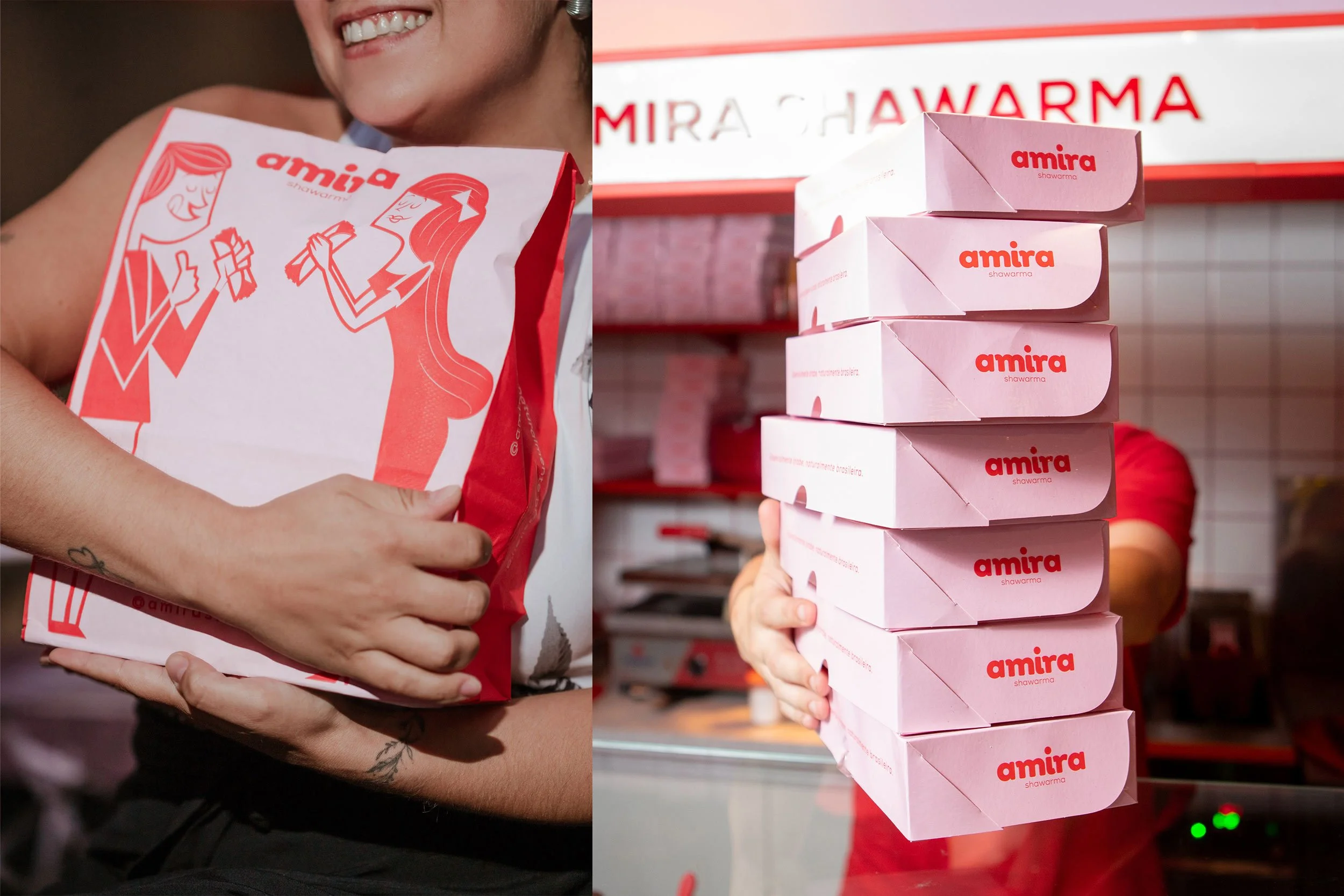
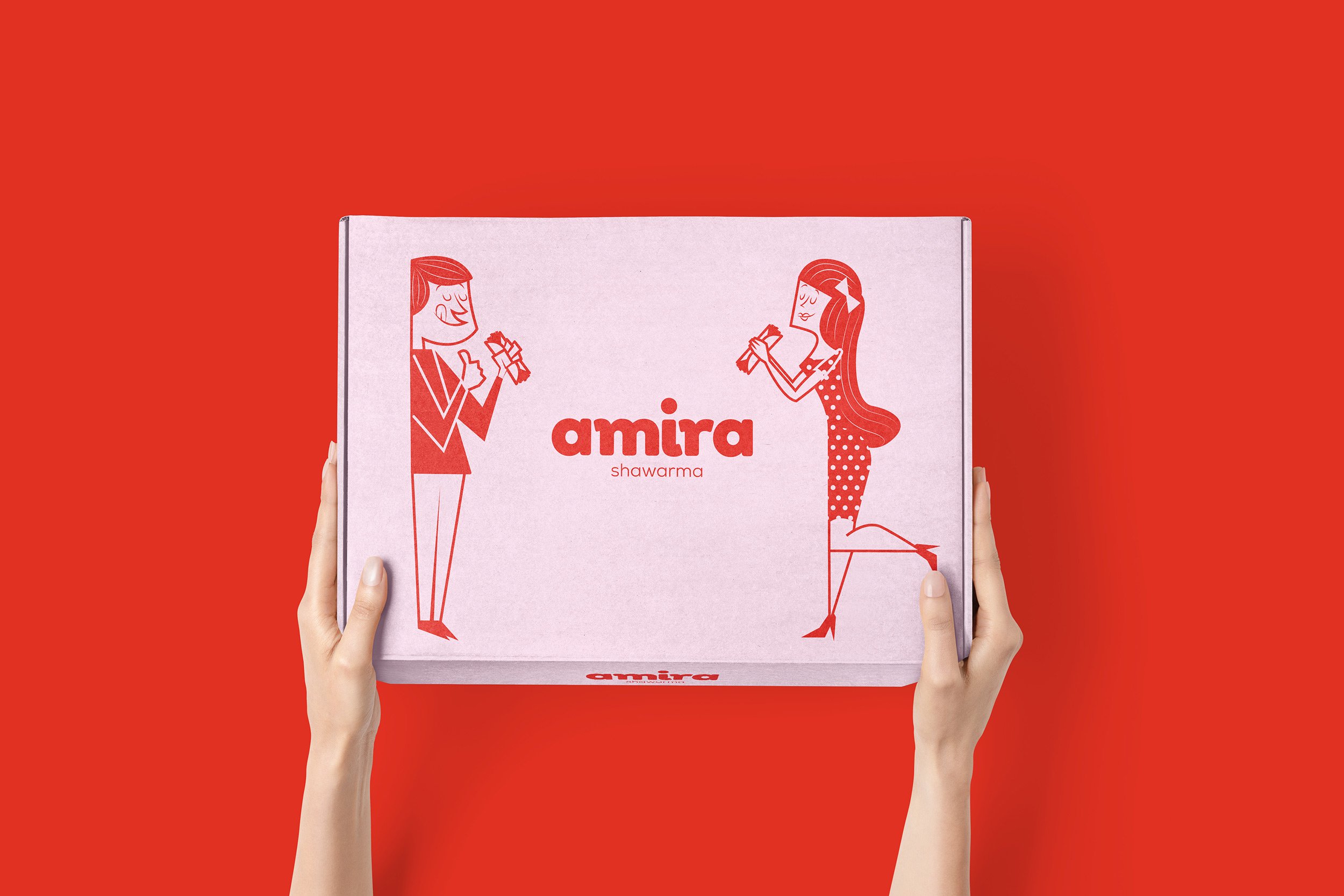
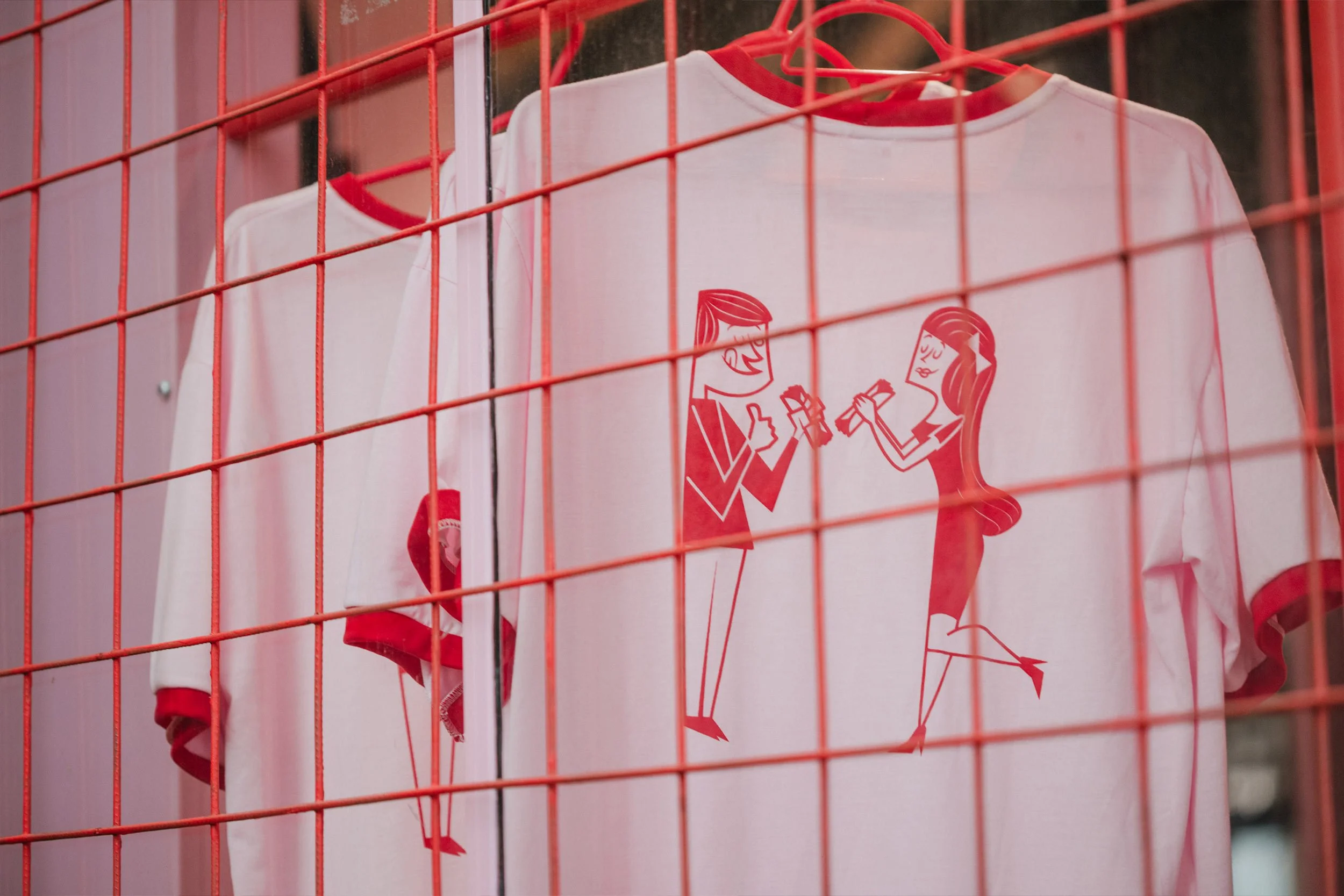
Custom illustrations introduced personality and storytelling into the brand.
These elements:
Increase memorability
Humanize the brand
Enhance packaging impact
Art Direction and Consistency
Consistency across all visual outputs reinforces trust.
In food delivery branding, where decisions are fast, clarity and coherence directly impact conversion.

Packaging and Experience: Food Delivery Branding That Converts
Packaging is one of the most powerful tools in food delivery branding.
It is often the first physical interaction with the brand.
Packaging Design as a Strategic Asset
Instead of being just functional, packaging was designed as a branding tool.
It reinforces:
Identity
Perceived value
Brand recognition
Creating a Memorable Delivery Experience
In delivery-first scenarios, branding replaces physical atmosphere.
Increases perceived quality
Encourages repeat orders
Drives social sharing
Consistency Across All Touchpoints
The same identity was applied across:
Packaging
Digital platforms
In-store materials
Consistency builds familiarity. Familiarity builds trust.
Enhancing Perceived Value Through Design
Customers associate strong branding with better products.
This directly impacts:
Pricing power
Customer expectations
Brand positioning


Results: Business Impact of Strategic Restaurant Branding
Strategic branding is not subjective. It produces measurable results.
Increased Visibility and Differentiation
The new identity made the brand instantly recognizable in a crowded market.
This led to:
Higher engagement
Stronger first impressions
Increased brand recall
Emotional Connection and Brand Loyalty
The expressive identity created a deeper connection with the audience.
Emotional engagement drives:
Repeat purchases
Customer loyalty
Word-of-mouth growth
Pricing Power and Perceived Value
Strong branding increases willingness to pay.
This reduces dependence on discounts and price competition.
Long-Term Brand Equity Growth
Over time, consistency builds brand equity.
This transforms branding from a cost into a long-term business asset.
Ready to start a new project?
Drop us a message to schedule a meeting or request a customized quote. We'd love to hear more about challenges.
Frequently Asked Questions
-
A restaurant branding agency develops strategy, visual identity, and communication systems to help restaurants differentiate and grow.
-
Costs vary depending on scope and complexity. Strategic projects require higher investment but generate stronger long-term returns.
-
Yes. Strong branding helps small restaurants compete with larger players by increasing perceived value and recognition.
-
Typically between 4 to 12 weeks, depending on the project scope and level of strategy involved.
-
Yes. Strong branding increases perceived value, allowing restaurants to charge premium prices without losing demand.